
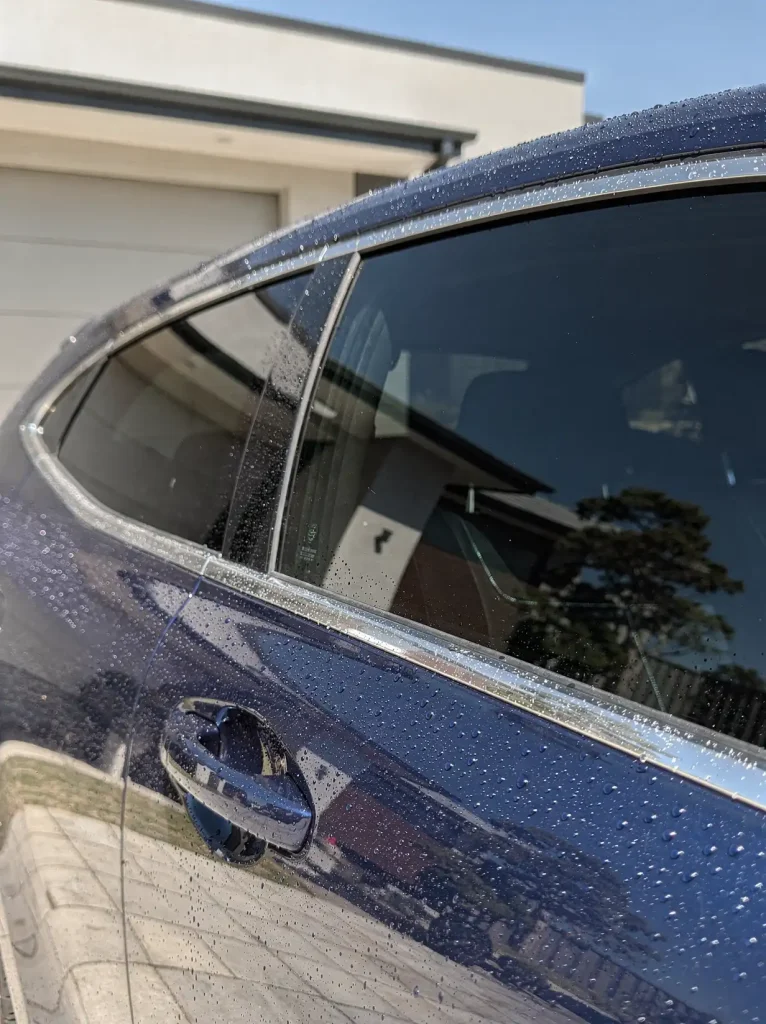
Picture a car left on a driveway in Cottesloe or Scarborough through a January afternoon. The sun is punishing, the ocean breeze carries a faint salty tang, and the paint feels almost too hot to touch. Nothing looks wrong. Yet at a molecular level, damage is already accumulating – slowly, invisibly, and faster than the owner would ever guess. Understanding these two local threats is the real foundation of effective car detailing in Perth, WA, because you can’t protect against a process you don’t understand.
Most owners react to visible problems. By the time fading or corrosion is obvious, the underlying degradation has been running for months. Here’s what’s actually happening to your vehicle.
Prefer to watch or listen?
Listen onApple Podcasts
How Perth’s High UV Index Breaks Down Clear Coat and Paint
Perth records some of the highest UV levels of any major Australian city, and ultraviolet radiation is far more than just “strong sunlight”. UV photons carry enough energy to break chemical bonds. When they strike your clear coat, they trigger a reaction called photo-oxidation.
The clear coat is a transparent polymer layer designed to protect the coloured paint beneath it. UV energy gradually snaps the long polymer chains in that layer, causing it to lose flexibility and clarity. This is why an ageing clear coat starts to look hazy, cloudy or chalky – it is literally disintegrating from the surface down.
Underneath, the pigments in the colour coat also absorb UV and lose their chemical stability. Reds and dark blues are especially vulnerable, which is why they fade toward pink or grey first. Once the clear coat thins, this fading accelerates rapidly because the pigment loses its shield.
The Hidden Threat of Coastal Salt Air
Salt does not need to arrive as a splash of seawater to cause harm. In coastal suburbs, airborne salt aerosols drift inland on the sea breeze and settle on every surface of your car. These microscopic salt particles are hygroscopic, meaning they attract and hold moisture from the air.
That combination – salt plus trapped humidity – creates a thin electrolyte film on metal surfaces. This film dramatically speeds up the electrochemical reaction we call corrosion, or rust. Salt also accelerates oxidation on painted and metal surfaces by lowering the resistance needed for that reaction to proceed.
Cars in suburbs closer to the coast face a heavier, more constant salt load than those further inland. Vulnerable points include door edges, wheel arches, the underbody, and any small stone chip that has exposed bare metal. Salt seeks out these weak spots and works inward.
Interior Damage Owners Overlook
Damage isn’t limited to the exterior. Glass blocks some UV but transmits plenty, especially the wavelengths that degrade materials. Inside a parked car, cabin temperatures can climb far above the outside air, and that heat amplifies UV damage to interior surfaces.
The result is a familiar set of problems in Perth cars:
- Dashboards that crack, warp or develop a dull, powdery surface
- Upholstery and trim that fade unevenly where the sun lands hardest
- Rubber seals and plastic components that turn brittle and lose their pliability
- Leather that dries out, stiffens and eventually splits
These changes are largely one-directional. Once a plastic dashboard has cracked from combined heat and UV, no cleaning will bring it back.
Why UV and Salt Together Are Worse Than Either Alone
The genuine danger in Perth is not UV or salt on their own – it’s the way they compound each other, with heat acting as the accelerant. Chemical reactions generally speed up as temperature rises, so a hot summer surface corrodes and oxidises faster than a cool one.
UV first weakens and micro-cracks the clear coat. Those tiny fissures give salt-laden moisture a path to reach the paint and metal beneath. Salt then drives oxidation in exactly the places UV has already compromised. Each threat makes the other more effective, and Perth’s heat pushes the whole process along. This is why cars here can show wear that seems premature compared to vehicles in cooler, inland climates.
Visible Warning Signs Your Car Is Already Suffering
By the time damage is obvious, the process is well advanced. Watch for these signals:
- A dull, milky or chalky haze over the paint, particularly on horizontal panels like the roof and bonnet
- Colour that looks noticeably lighter or patchy compared to sheltered areas such as under the door mirrors
- Rough or gritty paint texture even after washing
- Small rust spots or bubbling near chips, seams and door edges
- Faded, cracked or hardened trim, dashboards and rubber seals
- Water that no longer beads and rolls off, indicating lost surface protection
Protective Measures That Counter UV and Salt Damage
The good news is that the mechanisms above are all interruptible. Prevention works because it targets the chemistry directly. A sound protective approach focuses on keeping a durable barrier between your paint and the environment.
Regular, thorough washing removes salt deposits before they can hold moisture against the surface – and reaching the underbody and hidden edges matters as much as the visible panels. A protective layer such as a quality wax, sealant or coating reflects and absorbs UV energy before it reaches the clear coat, and it also stops salt-laden moisture from settling directly on the paint. Inside, UV-blocking treatments and conditioning of plastics and leather slow the drying and cracking process. Managing how much sun and salt exposure a car receives is part of the same picture, which is one reason the right detailing frequency for Perth’s climate makes such a difference.
None of these steps reverse existing damage – they prevent the next stage. That’s why intervening early, while the clear coat is still intact, delivers the biggest payoff.
These threats don’t stay constant through the year. As Perth swings into its hottest, harshest stretch, UV intensity climbs and salt-carrying sea breezes become relentless. The owners who fare best treat the lead-up as an opportunity, getting a vehicle ready before the harshest summer conditions arrive rather than scrambling to repair damage after the fact. Staying ahead of the season is the single smartest move you can make for your car’s long-term condition.